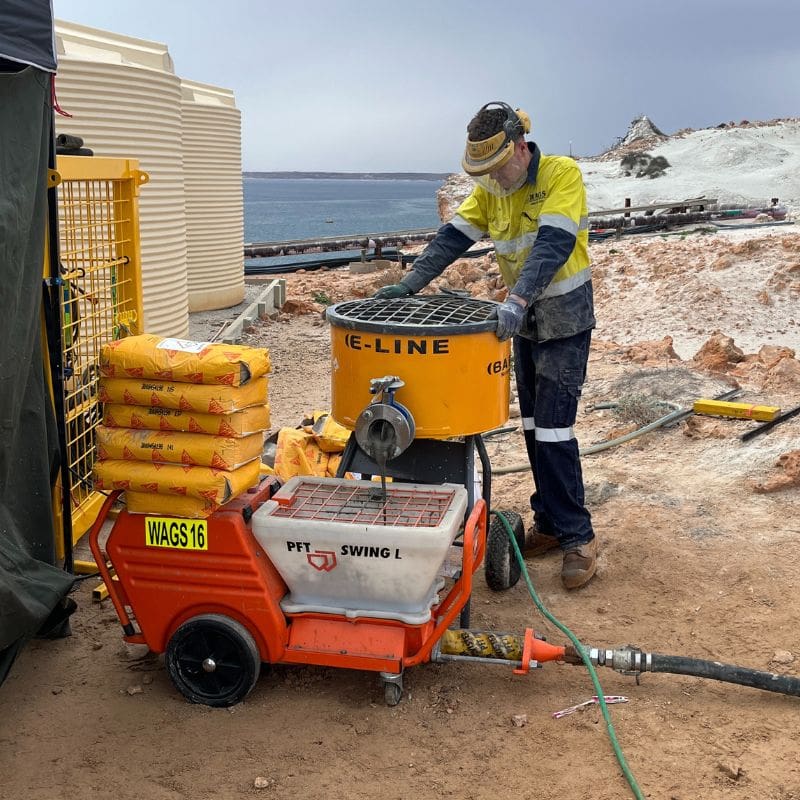
Grout pumps play a vital role in the Australian mining and construction industry, from grout cement repairs to grouting underground pipes. Proper maintenance and cleaning is needed to keep these machines running efficiently and prolong their lifespan, reducing the chances of expensive repairs, project delays, and increased downtime.
This article outlines the necessary steps to maintain and clean your grout pump effectively. Combined with using high-quality Australian-made products, you can significantly enhance the performance and longevity of your equipment.
We’ll cover daily maintenance routines, cleaning procedures, troubleshooting common issues, and annual servicing.

Understanding Your Grout Pump
A grout pump is designed to transport and apply grout, a fluid mixture of cement and water, to various construction projects. Understanding the basic components and types of grout pumps is crucial for proper maintenance and operation.
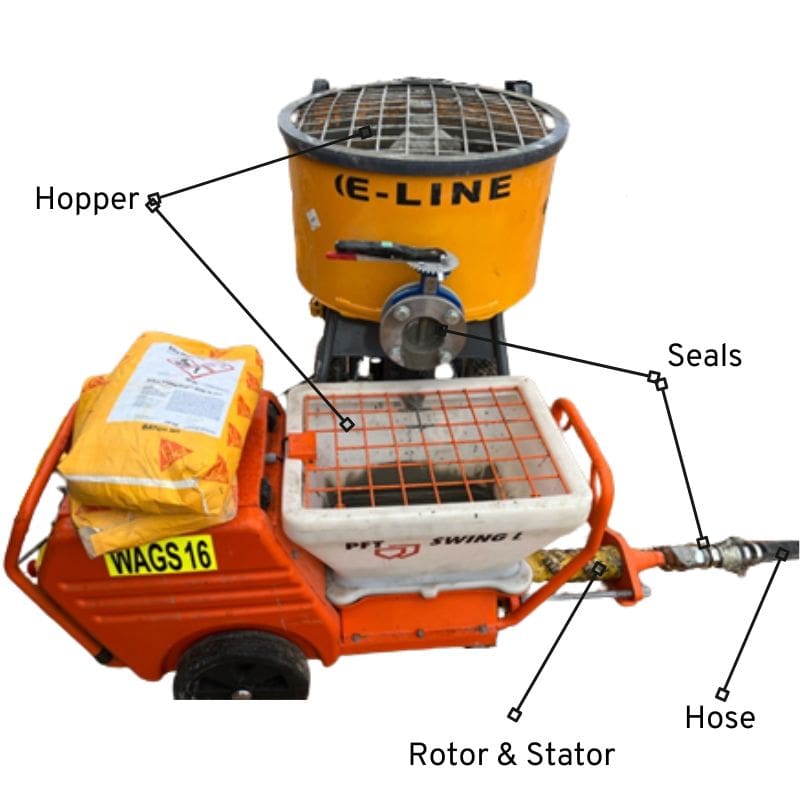
Primary Components of a Grout Pump
Hoses: Transport the grout from the pump to the desired location.
Hopper: The container where the grout mixture is loaded before pumping.
Seals: Prevent leaks and enable smooth operation of the pump.
Rotor and Stator: These components create flow and pressure within the pump.
Types of Grout Pumps
Piston Pumps:
These pumps use a piston to create pressure and move the grout. They are commonly used for high-pressure applications such as grouting underground cavities, post-tensioning ducts, and anchoring systems.
Piston Pump
Air-Powered Grout Pumps:
These pumps utilise compressed air to operate, offering portability and versatility for various applications.
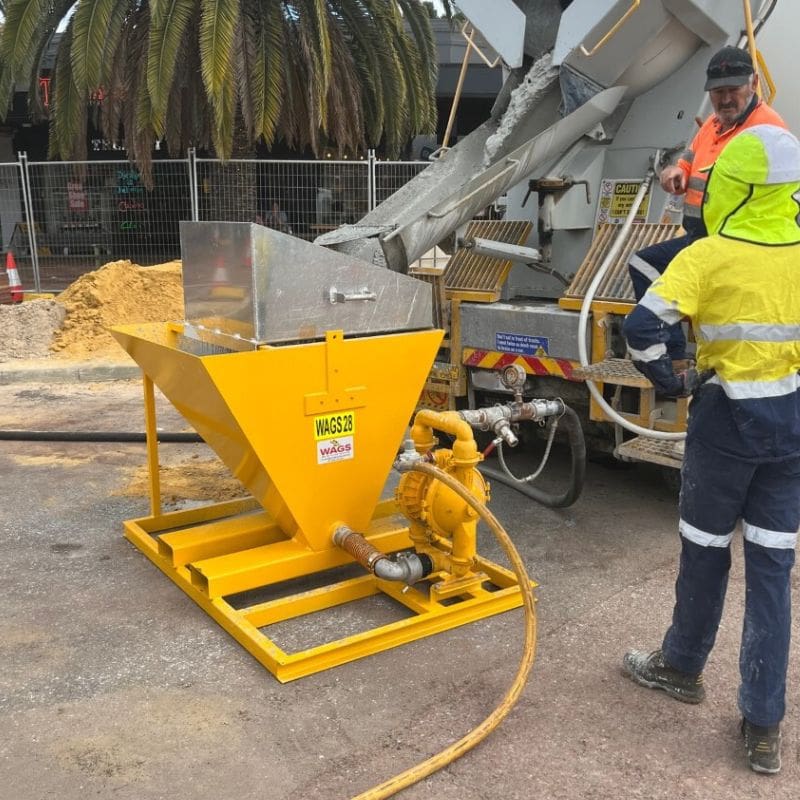
Diaphragm Pumps:
These pumps use a flexible diaphragm to push the grout through the system. They are often used in lower-pressure applications such as plastering, rendering, and applying thin-coat systems.
Diaphragm Pump
Peristaltic Pumps:
These pumps use a rotating tube to squeeze the grout through the hose. While less common in the construction industry, they are suitable for handling abrasive or corrosive materials and are often used in industrial applications.
Peristaltic Pump
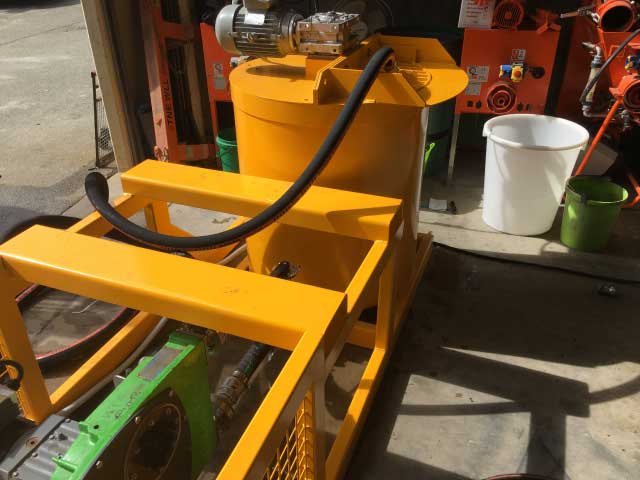
Mixer Pumps:
These pumps combine mixing and pumping functions in a single unit, making them ideal for concrete and mortar applications, by providing a consistent mixture while delivering the material to the desired location.
Mixer Pump
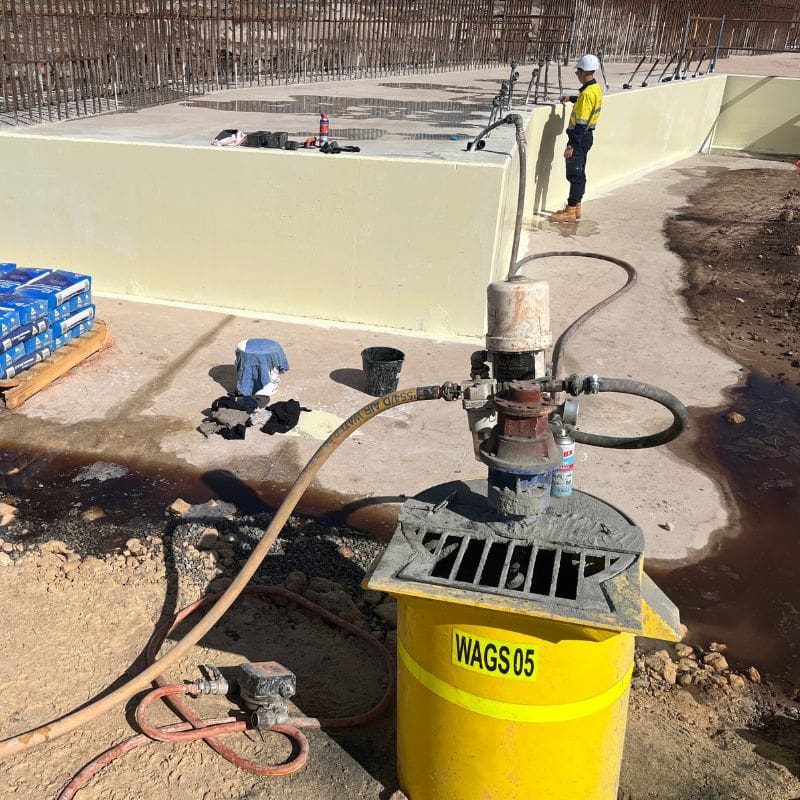
Worm Drive Positive Displacement Pumps:
Worm drive positive displacement pumps are a type of pump that use a screw-like mechanism to displace fluid. They are often used in industries where a consistent, steady flow of fluid is necessary, even at high pressures or when handling viscous or abrasive fluids. Here’s a breakdown of their key features and how they work:
Worm Drive Mechanism: The worm drive consists of a screw (or multiple screws) that rotates within a cylindrical casing. As the screw turns, fluid is trapped in cavities and moved along the length of the screw toward the discharge port.
Positive Displacement: The fluid is displaced at a fixed volume per rotation, providing a consistent output that is unaffected by changes in pressure.
Worm Drive Positive Displacement Pumps Advantages
Steady Flow: Unlike centrifugal pumps, worm drive positive displacement pumps provide a constant, non-pulsating flow.
High Viscosity Fluids: These pumps handle thick, viscous fluids (e.g., oils, slurries, and pastes) better than many other pump types.
Self-Priming: They are often self-priming, meaning they can remove air from the suction line and draw fluid into the pump.
High Pressure: Capable of generating high pressures without sacrificing efficiency.
Worm Drive Positive Displacement Pump
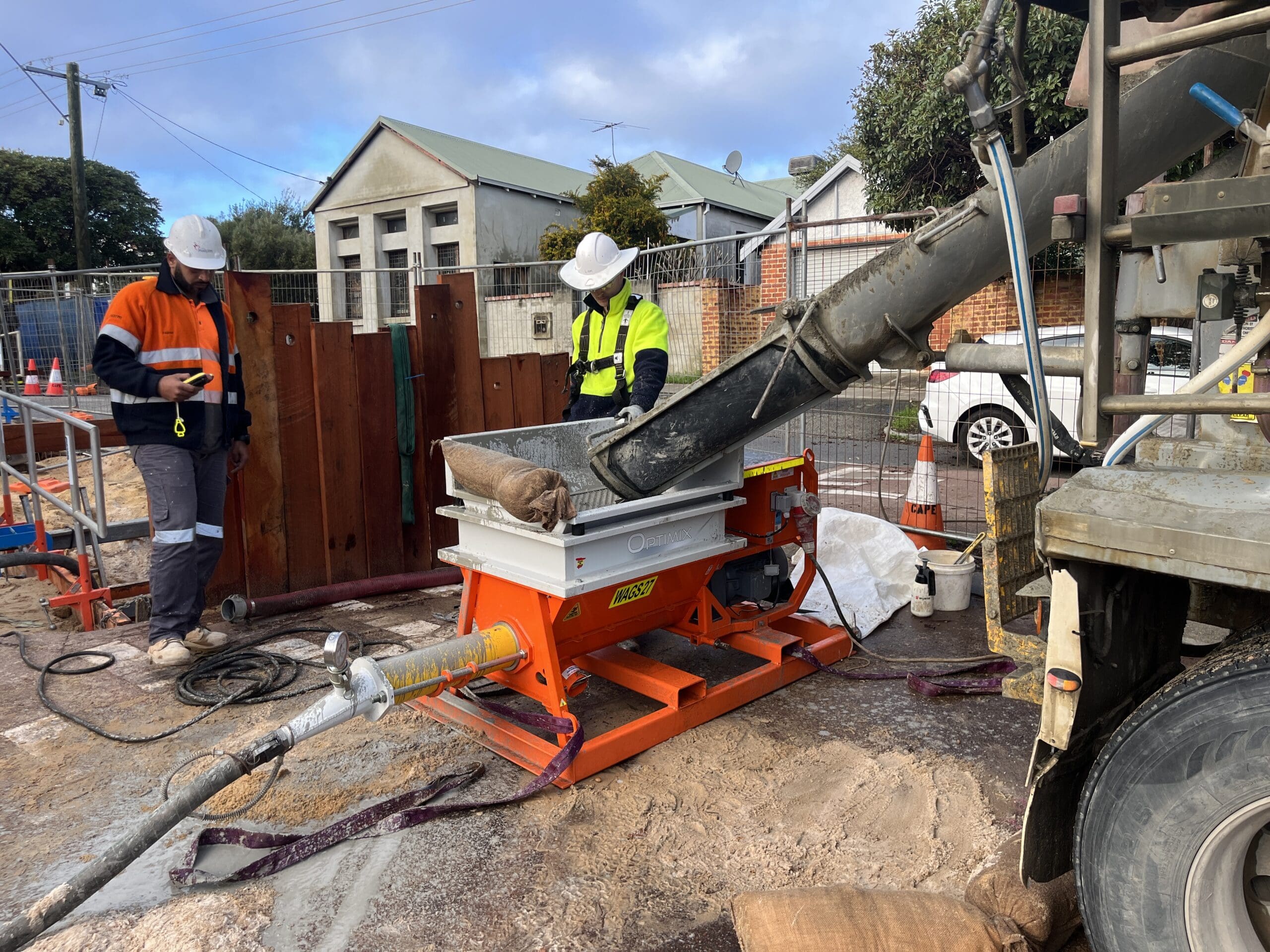
The specific type of grout pump required will depend on the size of the project, material consistency, and desired output. Consulting with a grout pump specialist can help you select the right equipment.
Note: The type of grout pump you own will dictate the exact maintenance procedures. Always refer to your pump’s user manual for detailed instructions.
Importance of Regular Maintenance
Regular maintenance is vital for optimal performance and longevity of your grout pump. We recommend following a recommended maintenance schedule can help prevent breakdowns, reduce downtime, and save on repair costs.
Daily Maintenance Routine
Visual Inspection
- Check the hopper and hoses for wear, damage, or leaks.
- Examine the pump frame and mounting for loose bolts or cracks.
- Inspect electrical components (if applicable) for any damage or wear. Make sure the unit has been tagged and emergency stops are working.
Lubrication
- Apply grease to seals and packing points as per the manufacturer’s recommendations. Avoid over-lubrication.
- Check oil levels (if applicable) and top up as necessary.
Cleaning
- Immediately after use, flush the pump and hoses with clean water to remove any residual grout.
- Use a stiff brush to scrub stubborn material from the interior surfaces of the hopper.
- For mixer pumps, thoroughly clean the mixing chamber to prevent grout build-up.
General Maintenance
- Store the grout pump in a covered, dry location to protect it from weather conditions.
- If long-term storage is needed, consider adding a fuel stabiliser to diesel engines (if applicable).
- Regularly check hoses and replace them if signs of wear or damage are present.
Cleaning Procedures
Initial Rinse
- Flush the pump and hoses with clean water to remove any residual material before starting new tasks.
Slurry Mix
- Prepare a slurry mixture of Portland cement and water (approximately 10 litres of water per 20 kg bag).
- Pump this mixture through the system to remove the remaining water and lubricate the hoses.
Final Washout
- After completing the grouting job, responsibly dispose of excess grout material.
- Wash out mixer tanks, paddles, and baffles, directing wash water into the pump hopper.
- Pump washout material through hoses until only clear water is discharged.
- Drain any remaining water from the pump and hoses.
Troubleshooting and Maintenance Tips
While regular maintenance can pre-empt many issues, problems may still arise. Here are some troubleshooting tips:
Common Issues and Solutions
- Clogs: If a hose becomes clogged, avoid forcing it to clear with tools. Instead, use a small-diameter tube connected to a water source to flush the blockage.
- Leaks: Inspect seals and packing for wear or damage. Replace as needed and tighten loose connections.
- Pump Performance: Ensure the grout mixture has the correct consistency. Adjust pump speed as necessary. Avoid pumping grout that is too thick, or running the pump dry.
- Engine Issues (for diesel-powered pumps): Consult the engine manufacturer’s manual for troubleshooting advice. Regular oil changes and filter replacements are crucial.
Maintenance Tips
- Conduct regular inspections during operation to monitor for abnormalities.
- Schedule annual servicing for diesel engines and replace filters as recommended by the manufacturer.
- Keep essential spare parts like seals, packing, and hoses on hand for quick repairs.
- Ensure operators receive proper training in grout pump operation and maintenance.
Best Practices for Grout Pump Care
These best practices will help ensure your grout pump operates efficiently and reliably.
Storage
- Store your grout pump in a dry area sheltered from weather elements.
- Cover the pump with a tarp or similar protective covering when not in use.
- Completely drain pumps and hoses to prevent freezing or damage.
Temperature Considerations
- In cold weather, take extra precautions to prevent freezing. Use antifreeze solutions if necessary.
- In hot weather, monitor the pump’s temperature and take steps to cool it down if overheating occurs.
Grout Consistency
- Maintain proper grout consistency according to manufacturer recommendations.
- Avoid pumping grout that is too thick, as this may damage the pump.
Operational Practices
- Never run the pump dry, as this can cause severe damage.
- Monitor performance during operation and address any issues quickly.
- Follow the manufacturer’s recommended operating procedures.
Proper maintenance and cleaning are essential for ensuring your grout pump’s optimal performance and longevity, significantly reducing downtime, repair costs, and safety risks associated with equipment failure.
If you encounter persistent issues or require expert assistance, consider contacting our team at Grout Pump Hire Perth. We specialise in grout pump hire, offering both dry and wet hire options to suit your project needs. Additionally, we provide comprehensive grout pump maintenance services and can undertake your entire grouting project with our contracting services.
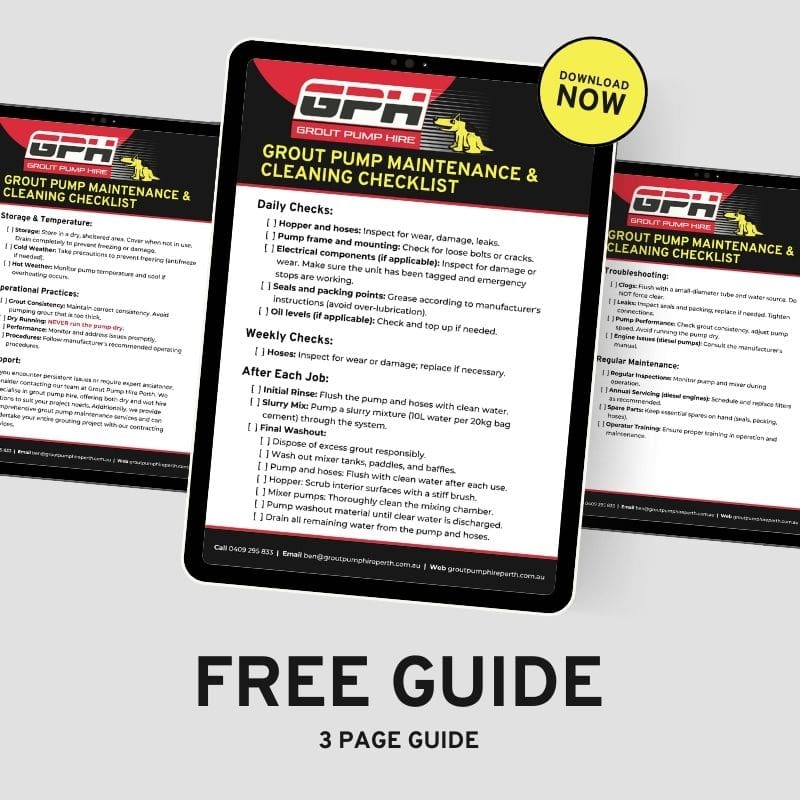
To help you stay on top of your grout pump maintenance, we’ve created a downloadable checklist that you can use as a handy reference. Grab your copy of this valuable resource here.